
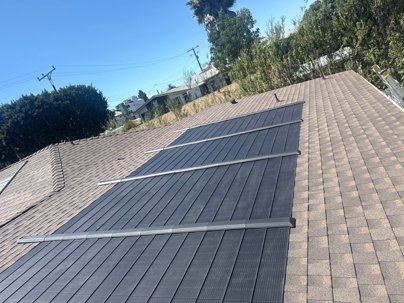
If you are planning rooftop solar on a Long Beach home — or in another Southern California Edison city BYLTup serves, such as Seal Beach, Huntington Beach, Costa Mesa, Newport Beach, Lakewood, or the South Bay — there is a California property-tax deadline already written into state law. It is not a rebate, and it is not a guess about what you might save.
California Revenue and Taxation Code section 73 says that the construction or addition of a qualifying “active solar energy system” is not treated as “newly constructed” for property-tax purposes. In plain terms, a qualifying system is generally left off the assessed value of the property, so adding it does not, by itself, raise that assessment. The State Board of Equalization describes this as a new-construction exclusion, not a tax exemption, and notes that a qualifying installation does not increase or decrease the assessment of the existing property.
That exclusion is scheduled to end. Section 73 remains in effect only until January 1, 2027. Board of Equalization Letter to Assessors 2026/034 confirms the same date: the exclusion becomes inoperative on January 1, 2027. A bill that would have extended a form of the exclusion, Assembly Bill 2389, was held under submission in the Assembly Appropriations Committee on May 14, 2026. As of this writing, no extension has been enacted, so the statute and the Board’s current letters are the rules to plan around.
What has to happen before January 1, 2027
The Board of Equalization has been clear that a system completed on any day before January 1, 2027, may qualify, and that a system completed after that date does not get a new exclusion under section 73. “Completed” is not the day panels arrive.
Under Board of Equalization Property Tax Rule 463, the date of completion is the date the property, or the portion of it, is available for use. In deciding that date, the assessor shall consider the date of the final inspection by the appropriate governmental official. If there is no such inspection, the rule looks to the date the prime contractor has fulfilled the contract obligations. Letter to Assessors 2024/031 points readers to that rule, and explains why unfinished construction still in progress as of January 1, 2027, is different from a system that was finished and available for use before that date.
Ask for a written completion date, and confirm the assessor’s view of the file, rather than assume a December install automatically qualifies. BYLTup can talk with you about roof condition, system design, permitting, and the inspection path for a solar panel installation. We do not set the assessor’s completion date, and we will not promise a finish date we cannot control.
If the system qualifies, the exclusion does not vanish on January 1
Section 73 also says that an active solar energy system that qualifies for the exclusion before January 1, 2027, continues to be excluded on and after that date, until there is a subsequent change in ownership. Letter to Assessors 2026/034 repeats that point. That continues an exclusion already earned. It is not a reason to delay a project that still needs to be completed.
The statute’s definition of an active solar energy system used to produce electricity includes storage devices and related power-conditioning equipment that are part of that system, up to but not including the stage of conveyance or use of the electricity. Solar swimming pool and hot tub heaters are carved out. If a battery is part of your project, ask the assessor how the system will be classified.
What this means for a Long Beach project
Long Beach is our home. Roof condition, shade, electrical service, and the city’s permitting and inspection process all affect whether a system can be designed, approved, and actually finished. The same is true in the coastal and South Bay SCE cities we serve. Utility incentives and federal tax credits are separate from this property-tax rule. For section 73, the sources that matter are the statute, the Board of Equalization, and your county assessor.
If solar is on your list for a Long Beach roof, start with the property. A system on a roof that still needs work is a roofing project first. Our Long Beach team can look at the roof and the solar scope together, then help you understand the permitting and inspection steps. If you want a written completion target, ask for it in the proposal and plan backward from inspections.
This article is an explainer, not tax advice. Read the Board of Equalization’s active solar energy system exclusion page and section 73 yourself, and confirm your situation with the Los Angeles County or Orange County assessor, or with a qualified tax professional, before you make a financial decision.
To talk through a Long Beach or SCE-city solar project, call BYLTup at (562) 414-4425 or request a consultation.
BYLTup: Build Your Long-Term. | CSLB 1091357